
Different soil mixing methods are used for the construction of cut-off walls, foundation elements and soil improvement. Yet the advantages of in-situ methods are universal:
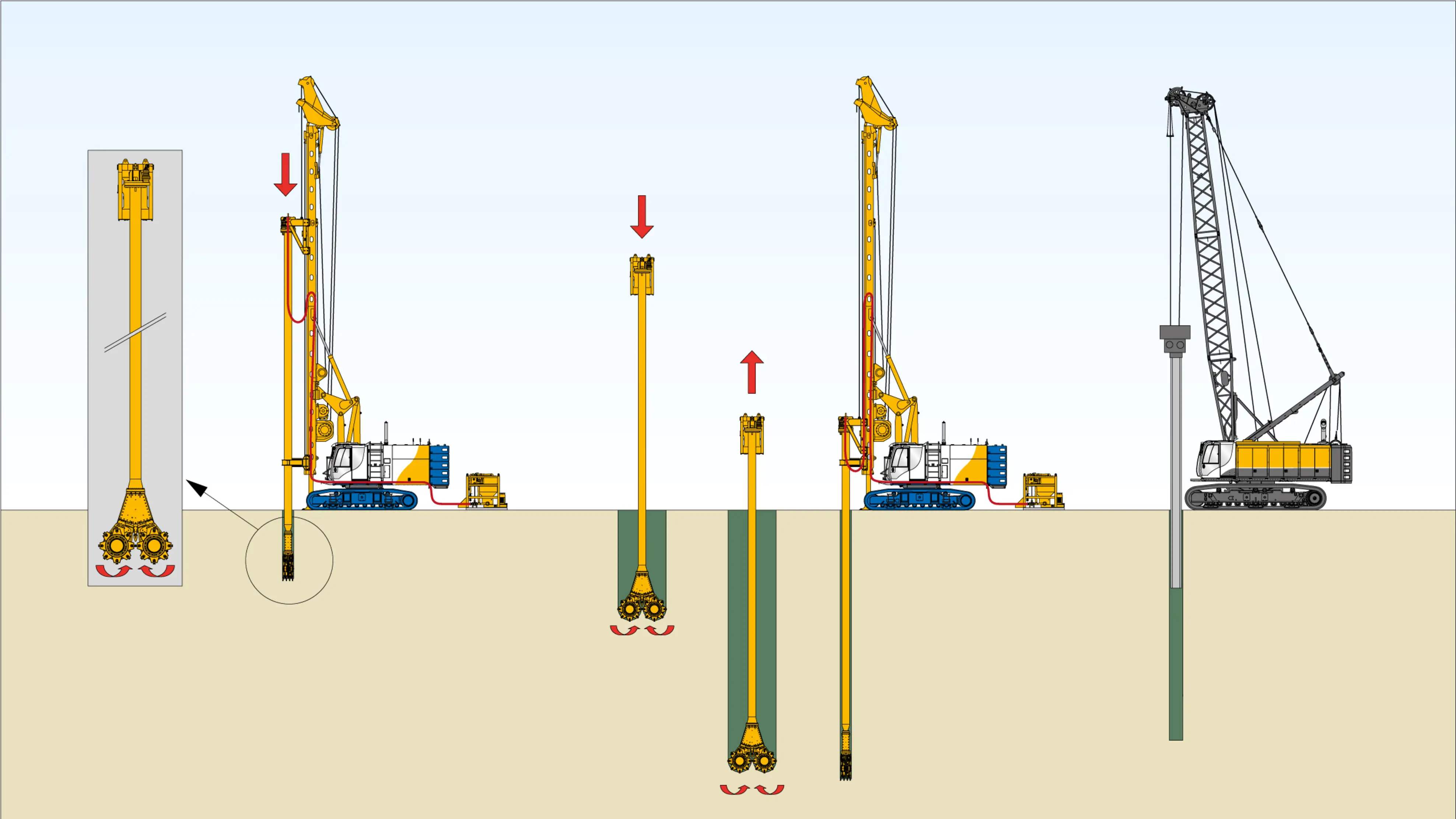
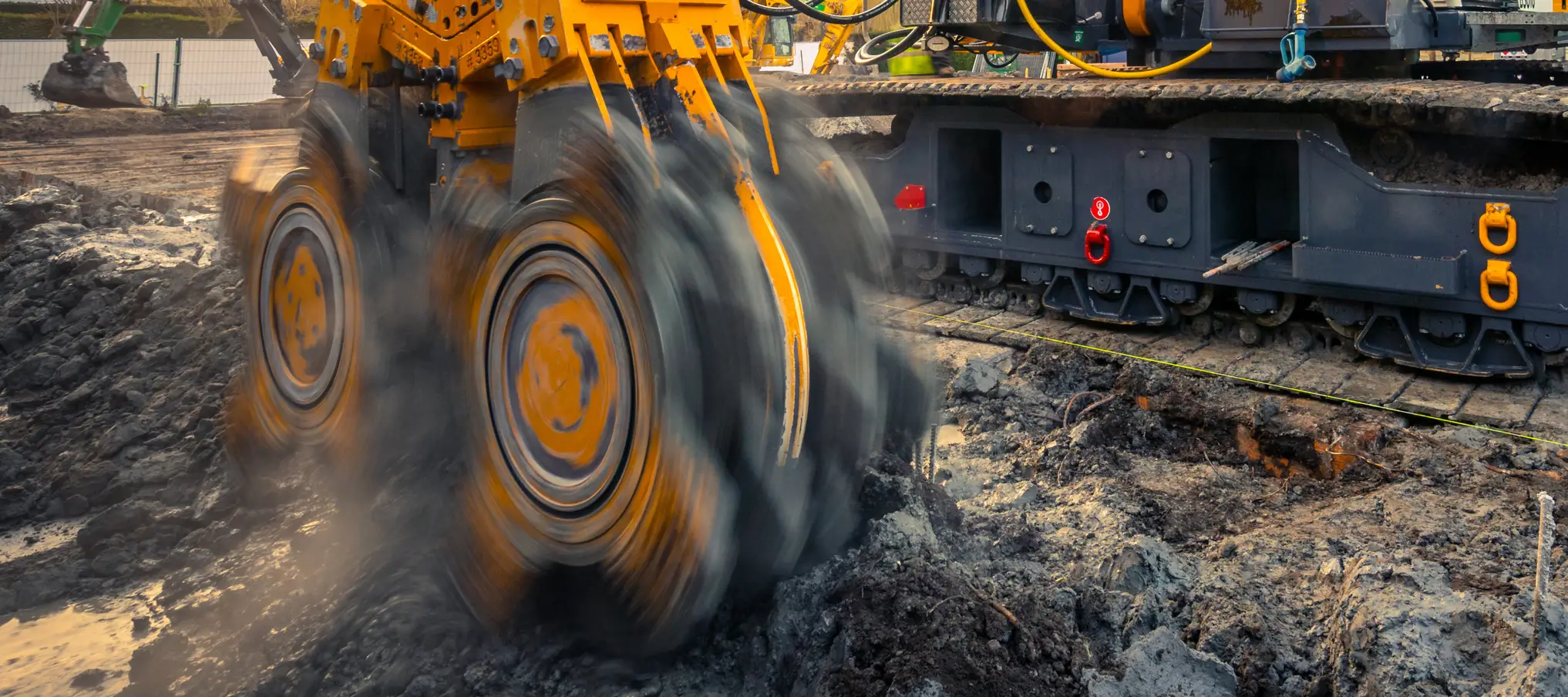
Cutter Soil Mixing (CSM) is derived from the trench cutting method (a guide wall is not required). Cutting wheels loosen the soil and mix it with a slurry to form a homogeneous soil-bentonite mortar. The method can be used to construct cut-off walls and retaining structures in various soil types, including hard soils.
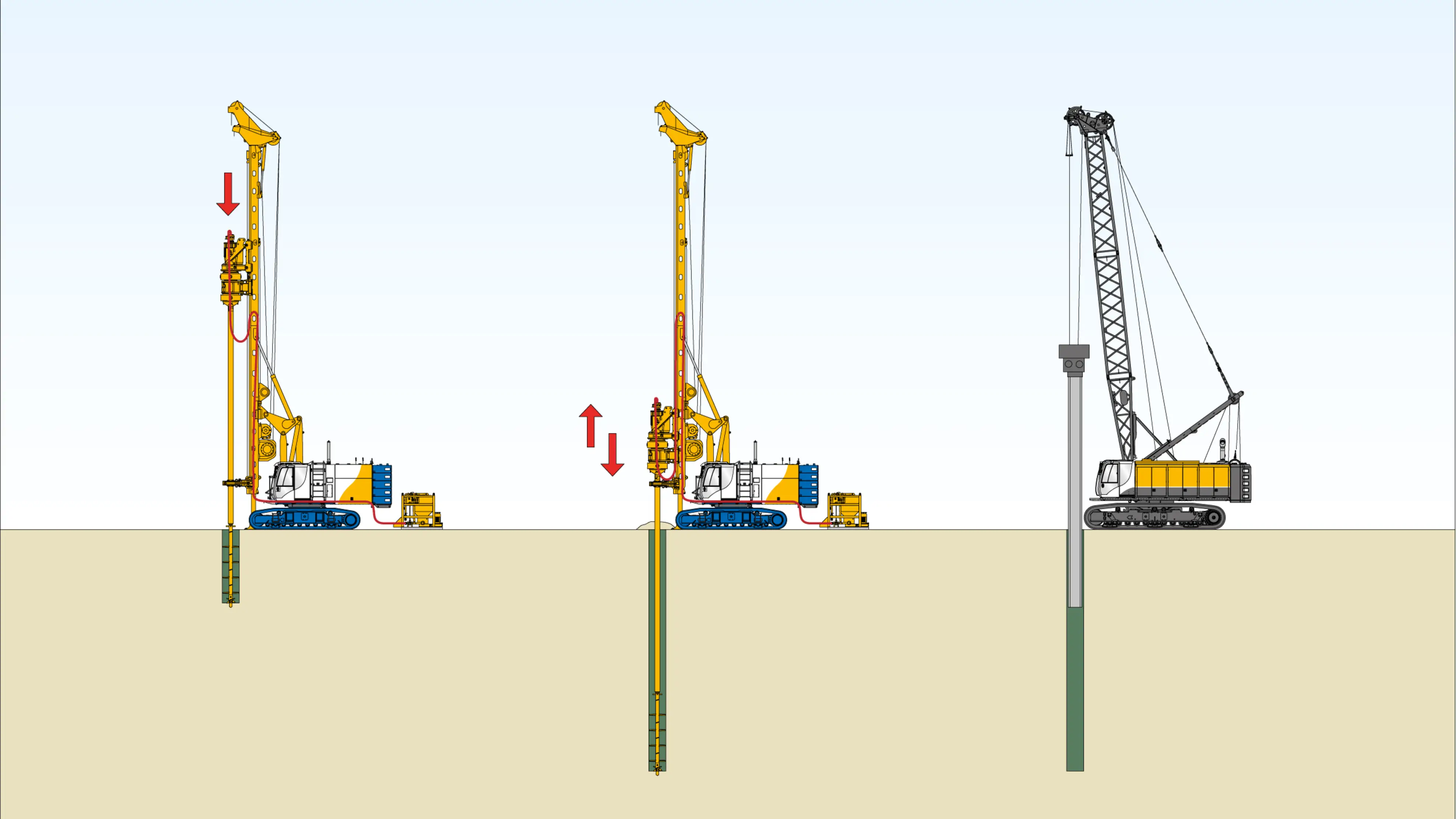
For Single Column Mixing (SCM), the single mixer – a mixing paddle with starter auger – is inserted into the soil. This mixes the embedded soil with a binding agent that is injected at the same time as insertion. The binding agent can be prepared on the mixing tool in dry or slurry form. The method is principally used in loose, non-cohesive soils as a soil improvement measure.
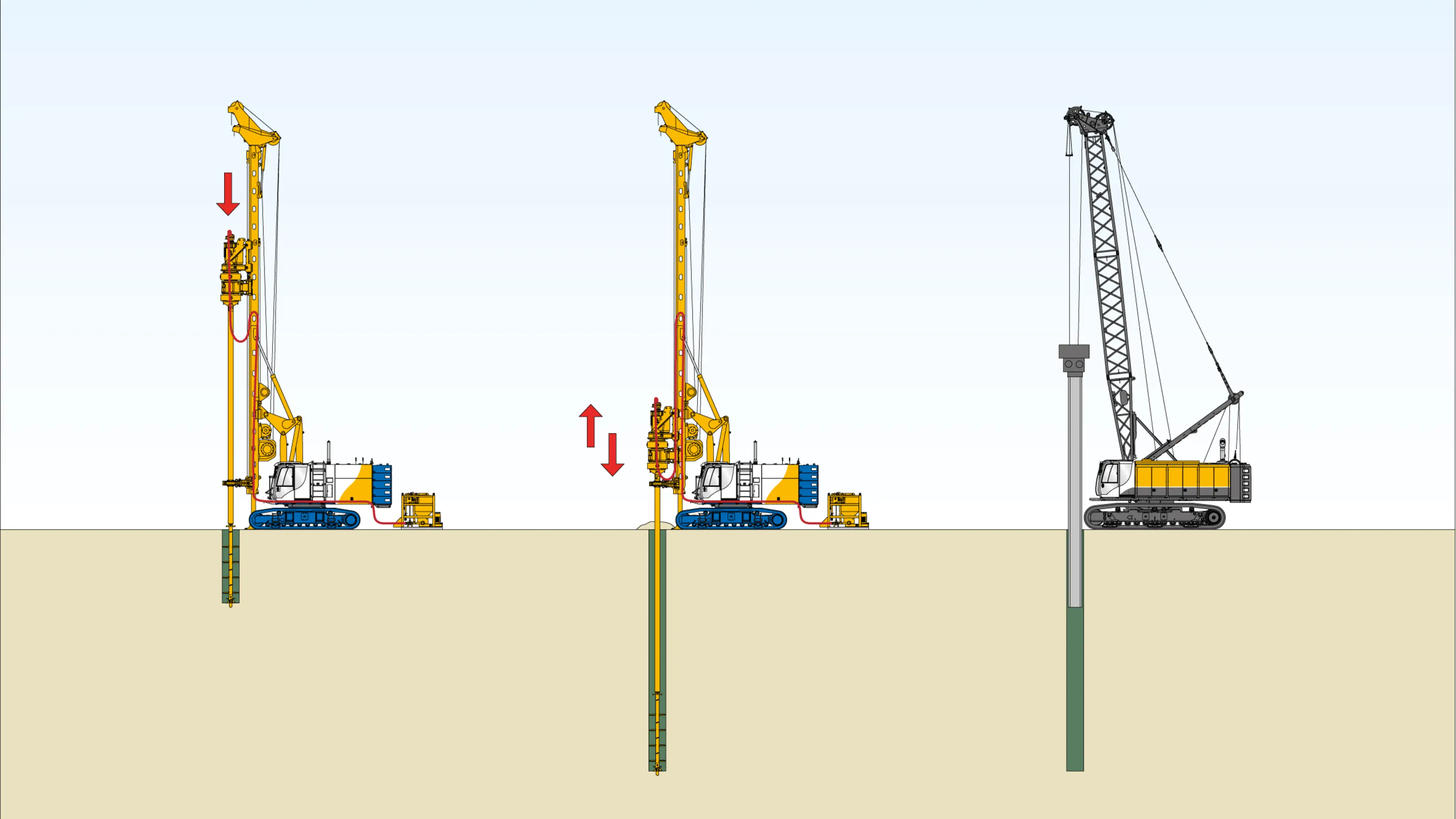
As an enhancement of single column mixing, with the SCM-DH method (DH stands for double head) a double-head drive turns two mixing tool components in reverse direction of rotation. This achieves a particularly intensive mixing of the soil with the slurry. The method is especially suited for the construction of soil mixing columns with larger diameters and in cohesive as well as sandy soils.